
The Great Depression & 1929 Crash: Causes, Impact, and Lessons


The 1929 Wall Street Crash - A defining moment in financial history
Introduction
The late 1920s seemed like a time of hope and growth. But beneath the surface something weak was building. Then in 1929 came the stock market crash, and with it a long, hard period called the Great Depression.
In this article we will explore: what caused the crash and the depression, how people and economies were impacted, and what lessons we can learn from it.
📅 Historical Timeline
1. What Happened in 1929: The Crash
In October 1929, shares on the New York Stock Exchange (NYSE) collapsed in value. One famous day is called Black Tuesday (October 29). Markets had been rising for years, many people were borrowing money to buy shares, and when confidence faltered the fall was steep.
Banks, investors and ordinary people lost huge amounts of money and many found themselves in trouble.

Stock Market Crash of 1929
Values plummeted, marking the beginning of the Great Depression
2. Key Causes of the Crash & Depression
Here are several important factors:
📊 Speculation and Margin Buying
Many people invested in shares using borrowed money, hoping the price would keep rising. When prices stopped rising, the system cracked.
Weak Banking and Money Supply Problems
Banks failed, and the money circulating in the economy dropped. Many loans could not be paid back.
🌍 Global Links and Trade Problems
The U.S. economy was connected to other countries. When one part failed, the problems spread. Policies like tariffs (taxes on imports) also made trade harder.
Over-production and Fall in Demand
Factories produced more goods than people could buy. When demand dropped, production slowed, jobs were lost.
3. What Was the Impact?
The shock was deep and long-lasting. Some of the effects:
Industrial output in the U.S. fell by almost 50% in the early years of the Depression.
Unemployment shot up — millions of people lost their jobs. Many families struggled to find food, shelter and basic comfort.
Banks closed, savings were lost, and trust in financial systems was shaken.
The depression spread across the world, hitting Europe, Latin America and other regions too.
📸 Historical Scenes from the Great Depression
.jpg&w=3840&q=75)
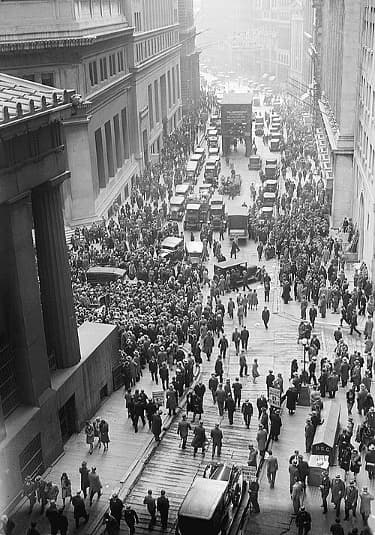
Crowd outside NYSE after the 1929 crash - panic and uncertainty gripped Wall Street
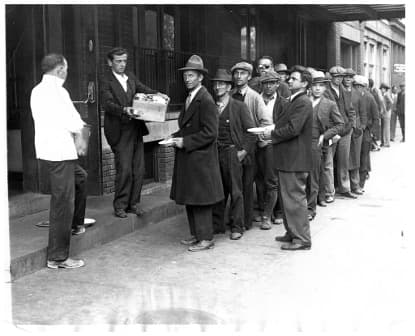
Bread line during the Great Depression - shows mass unemployment and hardship
.png&w=3840&q=75)
Graph of the 1929 stock market crash on Wall Street - the steep decline in values
Life during the Great Depression - capturing the era's hardship and resilience
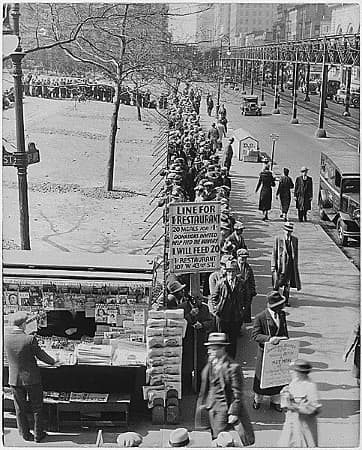
Everyday struggles during the Depression - a glimpse into the past
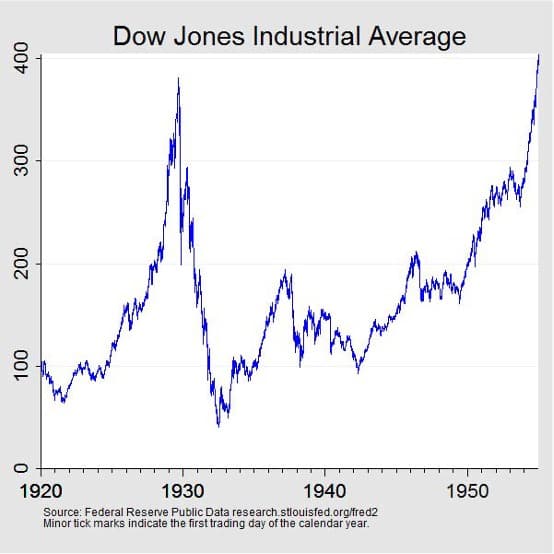
Dow Jones Industrial Average - tracking the market collapse of 1929
4. Important Lessons From the Great Depression
What can we learn?
⚠️ Don't Rely on Endless Growth Without Safety Nets
When things grow too fast without control, they can collapse.
Strong Institutions Matter
Banking systems, clear rules, transparent markets help avoid panic.
🌐 Global Linkages Mean Local Problems Can Become World Problems
Trade, money, and economic health are shared across nations.
🤝 When People Lose Confidence, the Economy Suffers
Trust is a key part of how markets and business work.
📋 Policy Matters
Governments and central banks can and do influence outcomes. Learning from history helps shape better responses.
💡 Key Takeaways
- ✓The 1929 crash and Great Depression were among the most serious economic events in history.
- ✓Prosperity is not guaranteed - many parts of the system must work together for stability.
- ✓Manage risk, build strong foundations, and understand the economy is part of a larger web.
- ✓For individuals, businesses and governments alike, these lessons remain valuable today.
5. Conclusion
The crash of 1929 and the Great Depression that followed were among the most serious economic events in history. They remind us that prosperity is not guaranteed and that many parts of the system must work together for stability.
For individuals, businesses and governments alike, the lessons are valuable: manage risk, build strong foundations, and understand that the economy is part of a larger web of global and social relationships.
Thank you for reading. I hope this gives you clear insight into the causes, impact and lessons of one of history's great economic challenges.
Learn from history to make better investment decisions today. Explore more insights and trading strategies with Green Red Candle LLP's educational content.