
Swing Trading vs. Day Trading: Which Is Right for You?

🏦 Introduction
If you're new to the world of trading, you've probably heard the terms "day trading" and "swing trading."
Both strategies aim to make profits from short-term price movements, but they're very different in how they work.
In this article, we'll explain — in simple words — what each method means, how they differ, and which one might be the right fit for you.
Let's dive in!
What Is Day Trading?
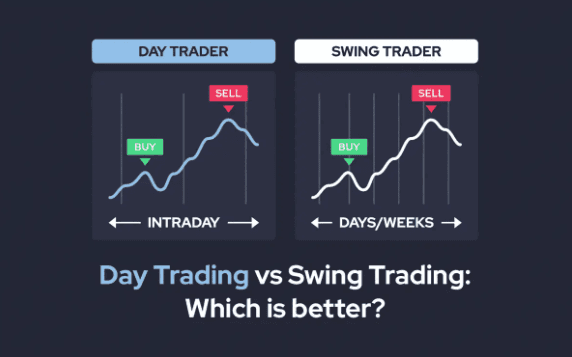
Day trading means buying and selling stocks (or other assets) within the same day.
A day trader doesn't hold any position overnight. They try to take advantage of small price changes that happen during the trading day.
📊 Example:
You buy 100 shares of a company at ₹500 in the morning and sell them at ₹510 in the afternoon. That ₹10 difference per share is your profit (before fees).
Day traders:
- •Open and close positions on the same day.
- •Often make multiple trades daily.
- •Use charts, indicators, and fast decision-making.
- •Depend on short-term price movements and volatility.
It's like sprinting — fast-paced, high energy, and needs focus! 🏃♂️
What Is Swing Trading?
Swing trading, on the other hand, means holding trades for several days or even weeks.
Swing traders look for "swings" or short-term trends in the market — when prices are likely to move up or down for a few days.
📈 Example:
You buy a stock at ₹500 because you believe it will rise in the coming week. After 7 days, it reaches ₹550 — you sell and take your ₹50 per share profit.
Swing traders:
- •Hold positions overnight or for a few days/weeks.
- •Use both technical and fundamental analysis.
- •Have more time to make decisions.
- •Focus on medium-term price movements.
It's like running a marathon — slower, steadier, and less stressful than day trading. 🏃♀️
⚖️ Key Differences Between Day Trading and Swing Trading
| Feature | Day Trading | Swing Trading |
|---|---|---|
| Holding Period | A few minutes to hours (same day) | Several days to weeks |
| Number of Trades | Many per day | Fewer, but held longer |
| Time Commitment | Full-time (constant monitoring) | Part-time (check market daily) |
| Stress Level | High (fast decisions) | Moderate (more relaxed pace) |
| Tools Needed | Real-time charts, fast internet, trading platforms | Technical charts and basic research tools |
| Risk | Higher (market moves fast) | Lower (more time to react) |
| Goal | Small profits from many trades | Larger profit from fewer trades |
Pros and Cons
Day Trading: Pros
- ✓Quick results — profits (or losses) come the same day.
- ✓No overnight risk (since positions close daily).
- ✓Opportunities every day in multiple stocks.
Day Trading: Cons
- ✗Requires full-time attention and fast decisions.
- ✗Very stressful and emotionally demanding.
- ✗Higher transaction costs due to frequent trading.
Swing Trading: Pros
- ✓Can be done part-time — good for working professionals.
- ✓Less emotional stress — more time to plan trades.
- ✓Can capture bigger price movements.
Swing Trading: Cons
- ✗Subject to overnight market risk.
- ✗Fewer trading opportunities.
- ✗Requires patience and discipline to wait for setups.
Which Style Fits You Better?
Let's figure it out based on your personality and lifestyle:
Choose Day Trading if you:
- •Enjoy fast-paced action and quick results.
- •Can monitor markets for hours daily.
- •Are comfortable taking small but frequent profits.
- •Handle stress and losses well.
Choose Swing Trading if you:
- •Have a day job or limited time.
- •Prefer researching and planning carefully.
- •Are patient enough to hold trades for days.
- •Don't want to stare at screens all day.
In short: Day trading is for speed lovers, while swing trading is for strategic thinkers.
Tips for Beginners
📝 Start with Paper Trading
Practice with a demo account before using real money.
📊 Learn Basic Chart Patterns
Study moving averages, RSI, and other indicators.
🛡️ Set Stop-Loss Orders
Protect yourself from big losses with proper risk management.
🧘 Manage Emotions
Never trade based on fear or excitement — stay disciplined.
💰 Focus on Risk Management
Only risk what you can afford to lose.
Whether you choose day or swing trading, success comes from discipline, consistency, and learning from mistakes.
Realistic Expectations
Trading — whether day or swing — isn't a "get rich quick" plan.
It takes time, skill, and emotional control.
Start small, build experience, and don't compare yourself to social media traders.
Remember, slow and steady growth beats risky excitement in the long run.
💬 Key Takeaways
- ✓Day trading = Fast-paced, same-day trades with constant monitoring.
- ✓Swing trading = Hold positions for days/weeks with less time commitment.
- ✓Choose based on your personality, time, and risk tolerance.
- ✓Both require discipline, education, and proper risk management.
🏁 Conclusion
Both day trading and swing trading can help you profit from market movements — but the best choice depends on your time, personality, and risk tolerance.
If you love action and can focus for long hours, try day trading.
If you prefer a calmer, more flexible approach, swing trading might be your best fit.
No matter which you choose — keep learning, stay disciplined, and always protect your capital. 💪📈
Ready to start your trading journey? Explore more educational content and trading strategies with Green Red Candle LLP. We're here to guide you every step of the way!